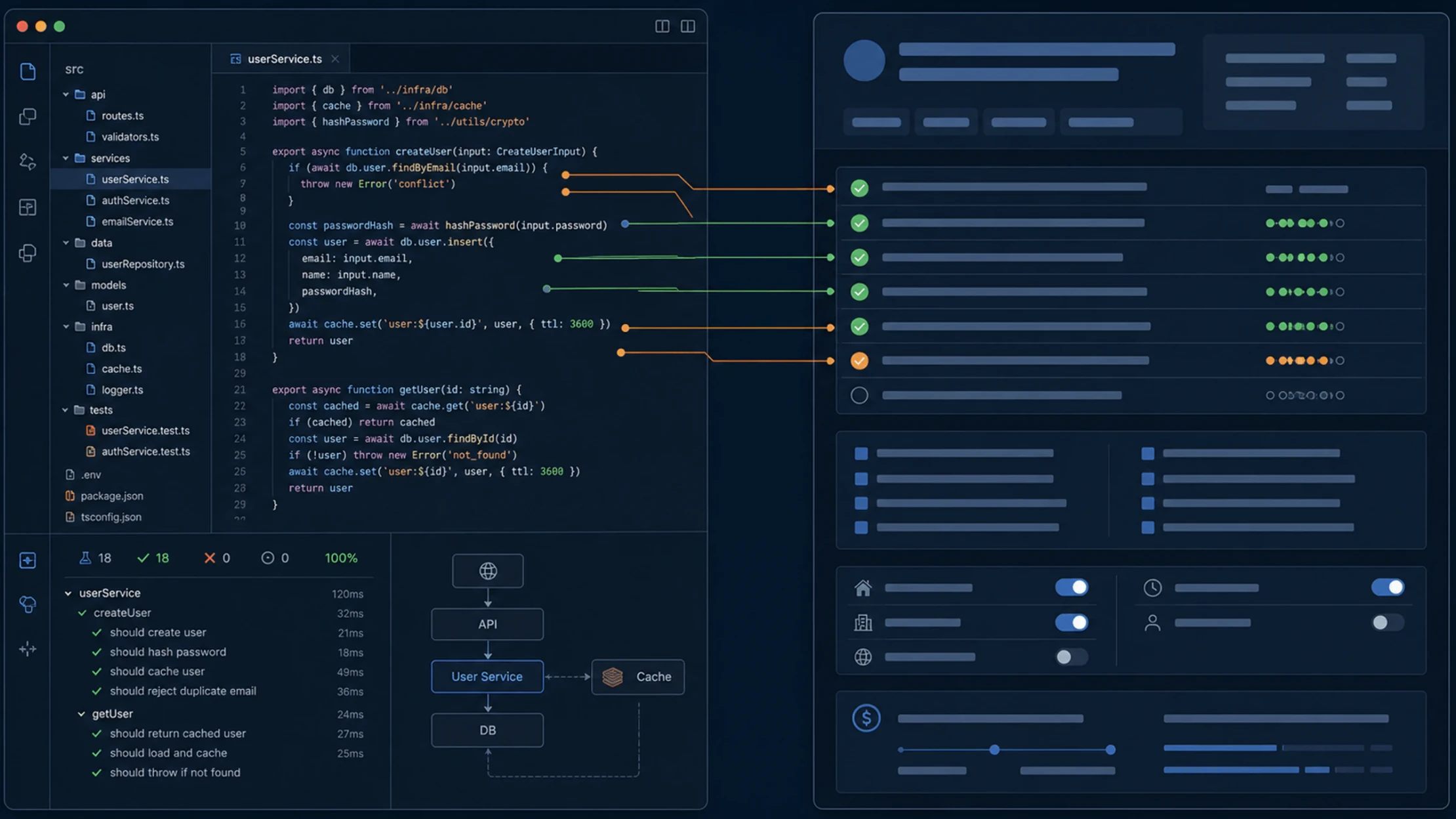
 A useful job description connects role requirements to the actual codebase
A vacancy may be the first evidence a developer sees of how a company communicates. If it hides the salary, mixes several jobs into one title, and lists every technology in the repository, the reader has to guess what the team actually needs. Good candidates often choose not to guess.
A useful technical posting reads as if someone close to the work wrote it. It explains why the role exists, what the new person will own, which constraints are real, and what the company offers in return. It can also admit what the team has not decided yet.
Agree on the role before writing the page
Do not begin with the public text. Begin with the internal decision. Ask the hiring manager why the role exists, which outcomes matter in the first months, and which problems the new person will own. Confirm the reporting line, team composition, budget, location constraints, employment form, and interview owners.
Resolve contradictions before publishing. A role cannot simultaneously require daily office presence and advertise unrestricted remote work. A team cannot seek an autonomous senior engineer while reserving every technical decision for someone else. Candidates notice these gaps, and the best ones often leave instead of asking the employer to reconcile them.
Create two lists: evidence required on day one, and capability that can be learned after joining. If everything is labelled essential, the vacancy becomes a record of the current team rather than a description of the person needed next.
Use a title candidates recognise
Choose a title that reflects the work and seniority in terms the market understands. Internal levels, playful titles, and broad labels may be meaningful inside the company but weak in search and ambiguous to readers. “Backend Engineer, Payments” carries more information than “Platform Ninja.”
Do not add remote, location, or an entire technology list to the title unless the page design and search context require it. Those details belong in structured fields and the opening summary. Keep the title stable across the vacancy, outreach, interviews, and offer documents.
If the role combines several disciplines, state which one is primary. A full-stack title should not conceal that most work is frontend maintenance, data engineering, or production support.
Open with the work and its context
The first paragraph should answer four questions: what the team builds, why it is hiring, what this person will own, and who benefits from the work. Two or three specific sentences are enough.
Avoid starting with company history unless that history changes the role. A developer can read the company profile separately. In the vacancy, context is useful when it explains scale, technical risk, product stage, regulated constraints, or how quickly the team must learn.
A credible opening may say that the person will take ownership of a service used by a particular customer group, reduce a known reliability bottleneck, and work with two named functions. It should not promise “impact from day one” without explaining the decisions the person can actually make.
Describe responsibilities as outcomes
Group responsibilities into five or six meaningful areas. Use verbs that show ownership: design, operate, migrate, review, investigate, collaborate, or document. Pair the activity with the reason it matters.
Compare these statements:
- “Write high-quality code.”
- “Design and operate the API boundaries used by the billing workflow, including monitoring and incident follow-up.”
The second gives a candidate material for self-assessment and interview preparation. It also creates a better basis for the scorecard. Include maintenance and operational work; hiding it produces mismatched expectations after the hire.
Be honest about balance. If the role spends substantial time on legacy systems, customer issues, on-call duty, or internal tools, say so. Interesting engineering is not limited to greenfield development, but it must be described accurately.
Separate requirements from preferences
Requirements should be capabilities that cannot reasonably be learned within the planned onboarding period. Express them through evidence where possible. Instead of demanding a fixed number of years with one framework, describe the complexity the person must have handled.
Keep preferred experience in a separate section and explain why it helps. Candidates from adjacent stacks, domains, or company sizes can bring useful patterns. A rigid brand-name checklist may exclude them without improving the hiring decision.
Review every requirement for hidden assumptions. Degree requirements, flawless local-language fluency, narrow industry history, or continuous employment may be justified for some roles, but should not be inherited automatically. Local law and company policy govern equal-treatment obligations; seek qualified guidance for the markets where you recruit.
Explain the technical environment without dumping keywords
List technologies in context. Identify which systems are central, which are being replaced, and which are incidental. Describe deployment, testing, ownership, and the maturity of the platform. A long stack list copied from a repository tells candidates little about daily work.
Useful details include team boundaries, review practices, release frequency, monitoring ownership, on-call expectations, and the main architectural direction. Avoid revealing confidential security information. The goal is to help an experienced reader understand the engineering setting, not to publish internal documentation.
If the team has technical debt, name the type of work involved and the support available. “Modernise a monolith gradually while feature delivery continues” is a real challenge. “Work with cutting-edge technology” is not a substitute for one.
Publish compensation and working conditions clearly
State a meaningful compensation range when the company can do so, including currency, gross or net basis, and payment period. Explain whether the range changes by employment form or location. Do not publish a range so broad that almost every possible offer fits inside it.
Salary transparency improves the first conversation only when the range matches the approval behind the role. Our salary transparency guide covers calibration, exceptions, and how to discuss a range without turning it into a promise disconnected from level.
Also state remote, hybrid, or office expectations; required time-zone overlap; employment or contract options; core hours; on-call; travel; equipment; and major benefits. Distinguish policy from team habit. “Remote-friendly” is not clear if attendance is expected twice a week.
Show the interview process
List the stages, their approximate purpose, and whether an exercise is involved. Name the expected decision path without promising a date the team cannot meet. Candidates use this information to assess the time commitment and prepare relevant examples.
Every stage should answer a different question. If three interviews independently test general technical competence, the process needs editing. Explain how take-home work is bounded, whether alternatives are available, and who can answer accessibility requests.
Include a contact route or clear application action, but do not ask for sensitive personal data before it is needed. If the platform supports private or anonymous profiles, explain when identity and contact details become visible.
Edit for proof, tone, and search intent
Before publishing, ask an engineer close to the role and a colleague outside the team to read the vacancy. The engineer checks technical accuracy; the second reader finds jargon and missing context. Then compare every claim with the approved role.
Use one main heading, short sections, and descriptive subheadings. Mention the recognised role title and core domain naturally, but do not repeat phrases for search engines. Search visibility depends on a page that answers the reader’s question, not a block of duplicated keywords.
Remove inflated adjectives, internal abbreviations, and statements that could describe any employer. Check title and description length in the actual page template. Verify the vacancy is indexable only while it is published, and that structured job data reflects visible content.
Use a final publication checklist
Confirm that the vacancy includes:
- a recognisable title and accurate seniority;
- a concise reason the role exists;
- outcomes and responsibilities;
- essential and preferred capabilities separated;
- stack and engineering practices in context;
- compensation and working conditions;
- interview stages and a clear next step;
- an owner who will respond and keep the page current.
Once published, review candidate questions. Repeated questions indicate missing copy. High application volume with weak fit usually signals a vague title, unclear essentials, or a promise that attracts the wrong intent. Update the vacancy rather than accepting noise as inevitable.
You can browse the current developer vacancies to see role, salary, work format, and company information together. The final test for your own page is straightforward: can a qualified person understand the work, the conditions, and the next step without asking for the missing half of the job?
See the plans and one-off tools available for direct technical hiring.